Why It Is Better to Keep Using Your Hand Even If You Have Trigger Finger
The reason it is better to keep using your hand even if you have trigger finger (trigger finger / tendon sheath inflammation) is that if you stop moving it, the joint may stiffen and become fixed.
Even if the symptoms are mild at first, leaving them untreated can allow them to gradually worsen, so it is important to address the problem early. If you leave the finger joints immobile, they will become stiff , and treatment may eventually become more difficult.
Here, based on an actual treatment case, we will look at how trigger finger can be improved by examining its causes.
- Have been diagnosed with trigger finger or tendonitis
- Develop trigger finger even when resting the hand
- Have had surgery, but the condition has returned
Is overuse of the hand the cause of trigger finger?
If you are diagnosed with trigger finger, you may be told to avoid activities that require the use of your hands. This is because trigger finger is often thought to be caused by overuse of the hands and fingers, and reducing the strain on the tendons and tendon sheaths in the hand is believed to help.
Activities said to make trigger finger more likely include using a computer keyboard or mouse, playing instruments such as the piano, and sports that rely heavily on the hands, such as tennis. However, many people heavily overuse their fingertips with computers and smartphones, and not everyone develops trigger finger. If overuse of the hands were truly the cause, then with the increase in smartphone users, we would expect far more people than before to be suffering from trigger finger.
So to what extent can overuse of the hands and fingers actually cause trigger finger?
People who do not develop trigger finger even when they overuse their hands
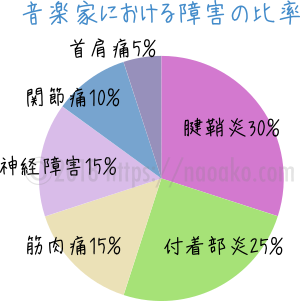
Let us look at how much overuse of the hands and fingers is actually related to trigger finger.
Here is one interesting set of data. According to Hand Disorders in Musicians by Dr. Naotaka Sakai, a physician who specializes in treating musicians, “the overall incidence of tendonitis among musicians is 30%.” Trigger finger is one form of tendonitis. Even among musicians, who use their fingers intensively, tendon-related problems such as trigger finger account for 30% overall.
This suggests that the cause of trigger finger may not be overuse of the hand alone, but something else as well.
What could those causes be?
The key to resolving trigger finger is understanding your body's habits
We now know that trigger finger is not caused only by overuse of the hand or fingers. That also means that simply resting the finger will not necessarily cure it. In addition, considering the risk that the joint may stiffen if the finger is not moved, it is better to keep using the hand unless the pain is severe.
The next questions to consider are: “Why does trigger finger appear?” “What causes it besides overuse of the hand?” and “What is the difference between people who develop trigger finger and those who do not?”
People who suffer from trigger finger tend to have characteristic patterns in the way they use their body and in how their joints move. By understanding these, it becomes easier to identify the cause and see the quickest path toward improvement. Let us look at the physical habits that lead to trigger finger and tendonitis .
Common traits of people with trigger finger
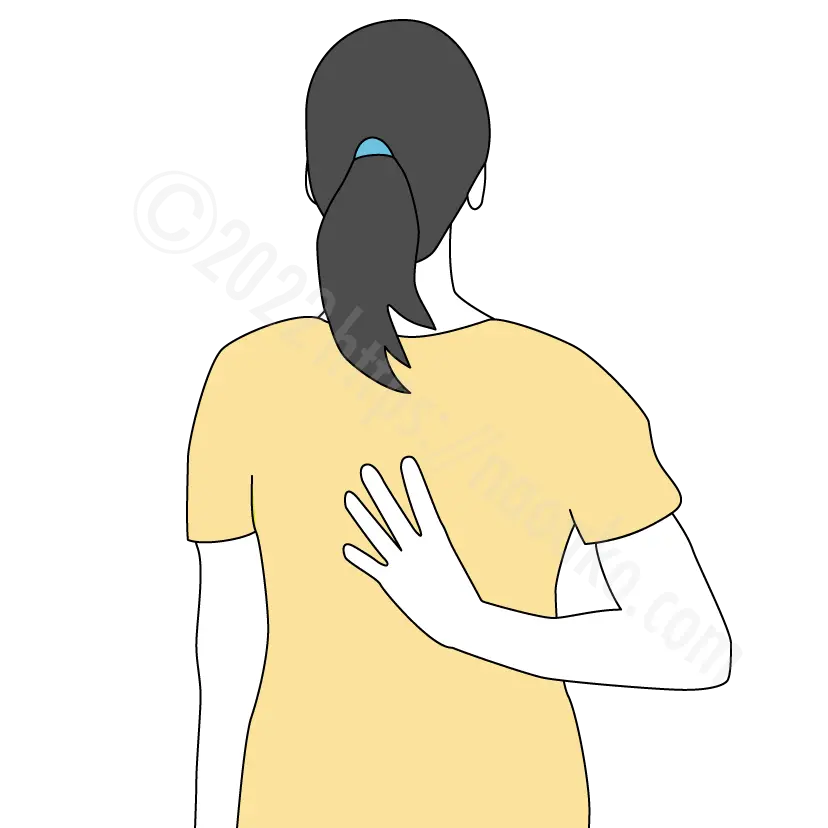
People with trigger finger do not have flexible shoulder movement.
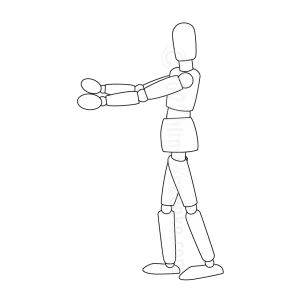
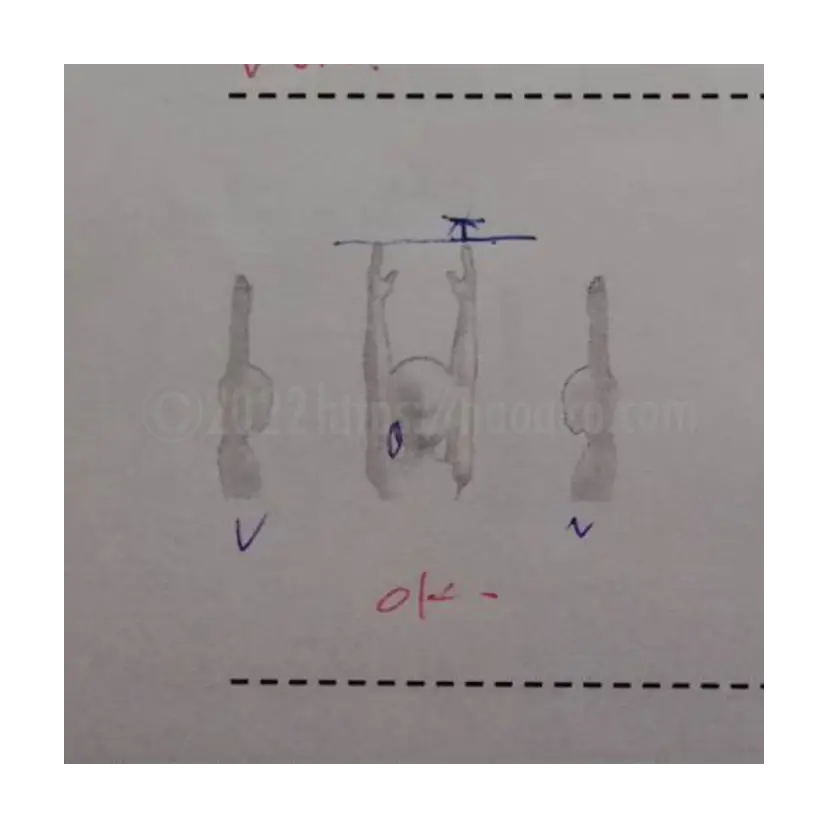
The illustration shows a shoulder mobility test. Ideally, the index finger should be able to reach at least the fifth thoracic vertebra. For people who have problems with their hands, this can be a difficult movement.
Why can they not raise the arm well? Because the chest muscle (the pectoralis major) is tight and shortened, which restricts shoulder movement.
People who are very flexible may even be able to clasp both hands behind their back, but that much flexibility is not necessary. If the fingers of both hands can touch each other, that is within the normal range.
How does tightness in the chest muscles affect trigger finger?
The relationship between trigger finger and the chest muscles
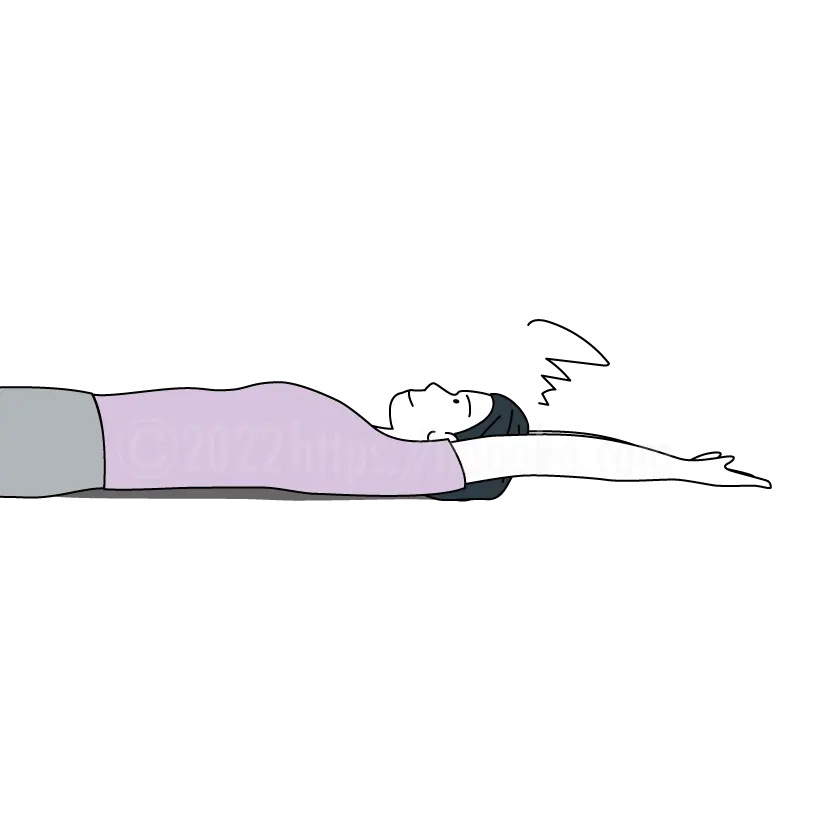
We have seen that people with trigger finger tend to have tight chest muscles, but why does that lead to trigger finger?
The chest muscles affect the position of the shoulder blades, and when the shoulder blades are out of position, the arms are also no longer in the proper position.
When the arm is not in the correct position, pressure is placed on the muscles and nerves that control the hand. As a result, not only trigger finger, but also difficulty moving the fingers and numbness can appear.
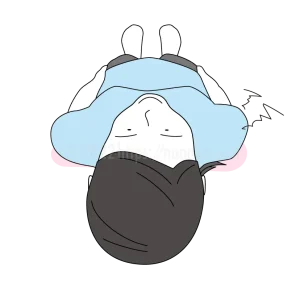
The illustration shows a check for whether there is a gap between the shoulders and the floor. Ideally, there should be no gap. This will improve as tension in the chest muscles is released.
Trigger Finger: Treatment Record
Let us look at the record and see the steps through which trigger finger improved.
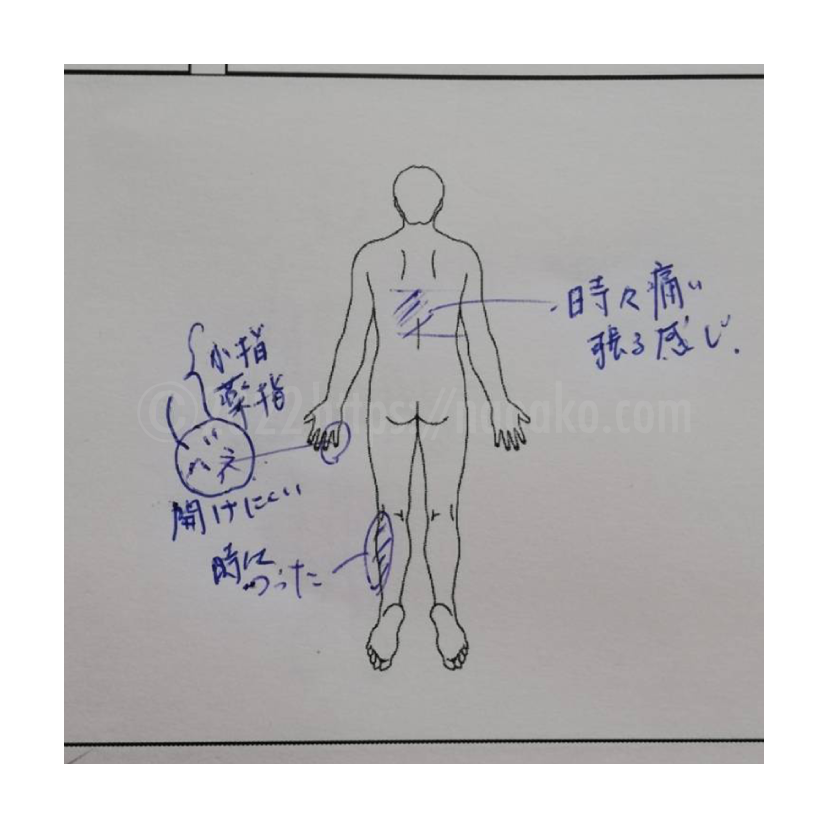
- Symptoms:
① Trigger finger (little finger and ring finger)
Difficulty opening the other fingers as well ② Tightness and pain on the left side of the back - Age: In their 70s
- Work: Long hours of sitting
- What they had tried: Stretching and muscle training
If we arrange the course of events in chronological order, it looks like this:
- Diagnosed with scoliosis in their 20s.
- Had stiffness in the neck and shoulders for many years and had previously experienced being unable to move the neck.
- For the past month, trigger finger had appeared in the ring finger and little finger, along with a feeling that the hand was difficult to open.
- Around the same time, back pain and tightness also began.
- Stretching and muscle training did not help
Various tests are performed to identify the cause. Different parts of the body each have a normal range of motion. If a part cannot move as it should, or if it is harder to move in one direction than the other, that may be contributing to the pain.
Examination results
The examination showed that there were dysfunctional areas throughout the body.
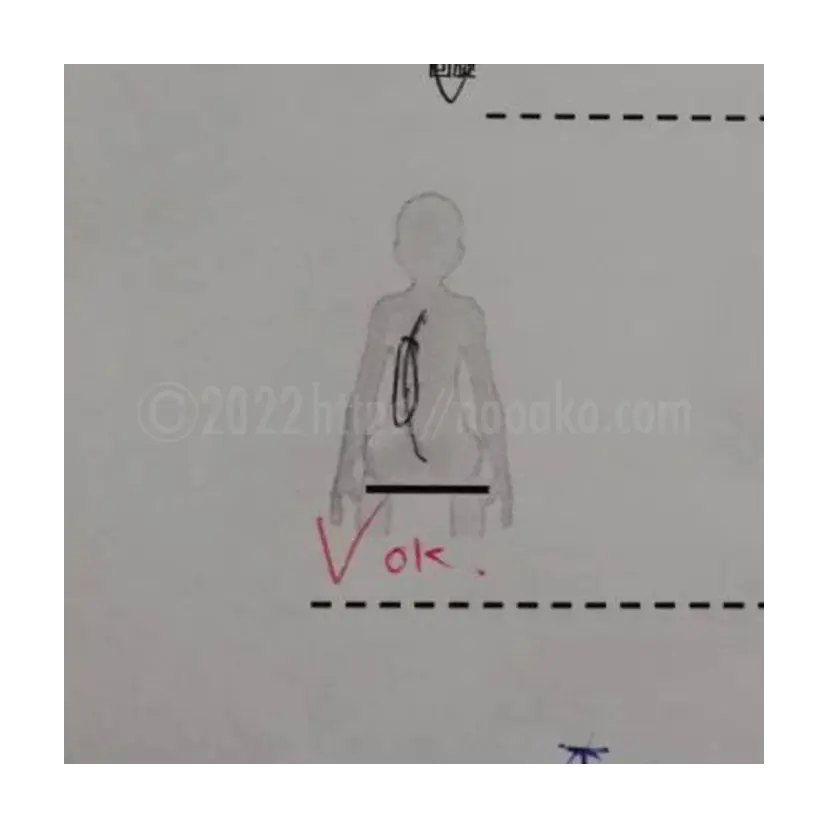
We examined the curvature of the spine.
It forms a curve like the letter C. The reason the back pain appears on the left side is that the muscles on the left are working hard to keep the curve from becoming more severe.
There are two possible causes of this spinal curve. The first is that the muscles in the right arm (the deltoid) are stronger than those in the left arm. The second is that the muscles in the left side of the chest (the pectoralis major) are stronger than those in the right side.
Considering that the trigger finger appeared in the left hand, it is highly likely that the left pectoralis major is the cause.
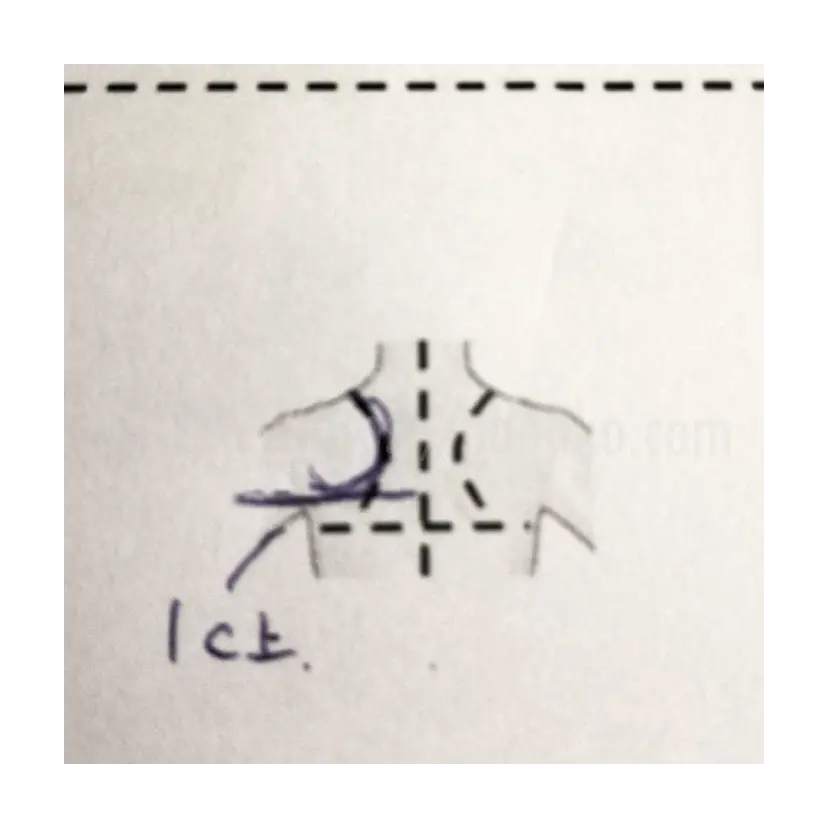
When the pectoralis major is tense, it rolls the left shoulder inward. In addition, the pectoralis minor also becomes tense, causing the shoulder blade to lift upward and remain out of position.
In this way, the conditions that lead to trigger finger are put in place.
Although the problem appears in the fingers, I do not touch the hand at the beginning. There are two reasons for this.
① Inflammation worsens, leading to more clinic visits
Massage will certainly improve circulation for a moment, so it can feel good. However, the muscles causing the pain are inflamed, and pressing on them can make that inflammation worse. When that happens, the pain continues constantly, and during treatment it becomes impossible to tell whether the symptoms are improving or not.
In that situation, it becomes impossible to judge on the spot whether the symptoms have improved, so the result is often, “That is all for today. Please wait and see how it goes,” which leads to more visits to the clinic. Increasing the burden on the client is not desirable.
② There is no cause where the pain appears
When there is a problem in the fingers, the cause is often hidden far away, such as in the abdomen or legs. Relaxing the muscles around the hand may temporarily ease the pain, but it does not address the root cause.
Also, the muscles causing the pain may not be muscles that should be loosened, and in that case, the more treatment they receive, the worse the pain becomes.
For these two reasons, even when a patient complains of trigger finger, I do not start by touching the hand.
Treatment details
Here we will introduce the treatment approach used in seitai.
“A new update has been released.” With notifications like this, apps on smartphones and computers are updated regularly. The purpose is to fix problems or rewrite programs so they work more conveniently.
In the same way, the body’s own program is rewritten almost every day. Its purpose is to use the body efficiently. For example, if you often work with your hands in front of your body, the body updates itself into a rounded posture so that the hands can reach more easily.
As this kind of bodily “program updating” continues, a posture that prioritizes efficiency becomes established, even if it is actually a bad posture.
However, when convenience is prioritized too much, that new posture often places strain on the body. The result is pain, which serves as an error signal.
If symptoms are left untreated, or if care is given without updating the body’s program, the pain can continue for a long time. This is what chronic pain is.
At NAKO, we identify problems through a variety of examinations and rewrite the program. Sometimes new problems appear when an update is made, but we continue testing, verifying, and updating the program until the problems are gone. It is much like the work of an engineer correcting data.
I tried again the movements that had been painful during the pre-treatment examination. The trigger finger had returned to normal. The back pain was also gone.
It may heal naturally. If the condition worsens, it will progress to the next stage, depending on the progression of the trigger finger.
① I have pain at the base of my fingers. My hands are swollen when I wake up in the morning.
② The base of the finger is swollen or feels hot. It is difficult to move.
③My finger is bent and won't straighten.
④ Repeated recurrences.
Even if the condition heals naturally, you are still using your body in a way that makes you more susceptible to trigger finger, so it's a good idea to take this opportunity to check what parts of your body are not in ideal condition.
Steps to resolving the problem with holistic treatment
The way we use our bodies, shaped through many experiences from childhood onward—play, sports, accidents, childbirth, and more—has created the condition our body is in today.
If you are in pain, that is simply your body telling you that there has been a problem with the way you have been using your body up to now.
The first stage of solving the problem is to stop the pain. Once the cause has been identified through examination and treatment is given accordingly, the pain will lessen. Only after the pain has improved is the body ready to learn correct movement patterns.
The second stage is learning how to use the body correctly. This changes both the body and the brain so that you do not return to your old condition.
Because physical pain is often caused by everyday habits, stretching and exercise are necessary. Just like brushing your teeth, steady repetition is important.
If you want to resolve your pain, the first step is to stop the pain. Stretching and exercise come after that.