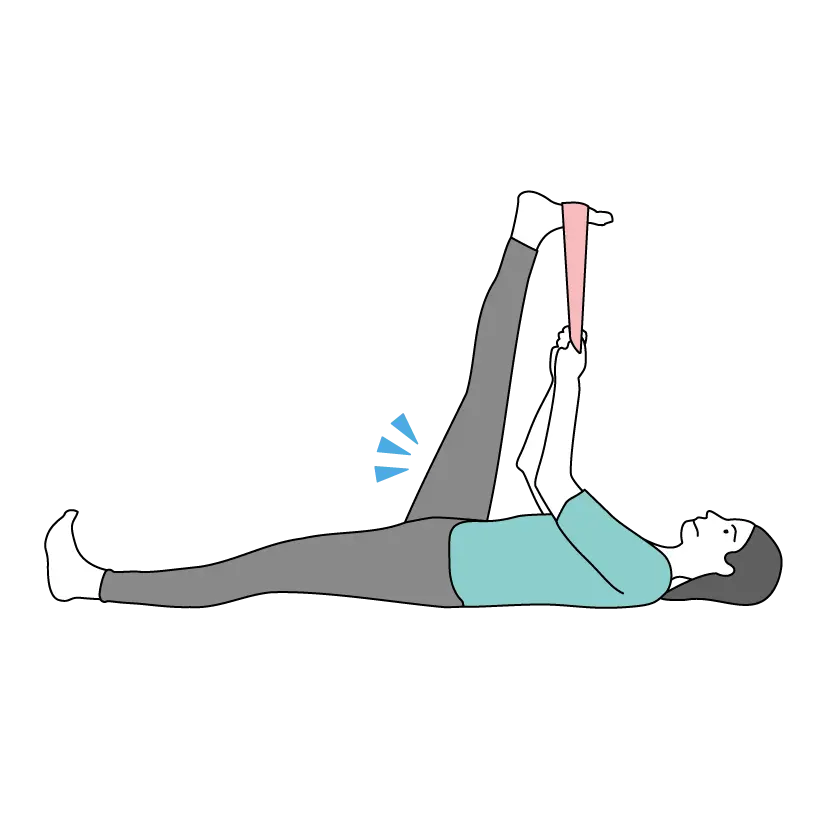
Lower back pain when lying on your back is caused by muscle stiffness
Lower back pain when lying on your back happens because you are sleeping in a poor posture. If your posture is poor even while you sleep, it is because your muscles have retained the pattern of your everyday bad posture.
If you can maintain proper posture on the bed, pain will not occur. To regain proper posture, you need to identify the type of distortion in your body and stretch the muscles that are causing it.
This is the most important point. Inappropriate stretching or training not only fails to help, but can even make your symptoms worse.
This loosens the muscles that have been working hard to hold your body in a poor posture. It prepares your body for Step 3 training.
- You have not changed your bed or pillow.
- Your mattress firmness is appropriate.
- A doctor has told you there is no abnormality.
Why lying on your back causes pain
If you have lower back pain even though you have not changed your environment or habits, it is usually the result of the following three-step process.
Incorrect ways of using your body, repeated without you noticing, can lead to a hunched back or swayback posture. As a result, your body becomes fixed in a distorted posture.
To lie on your back on a flat mattress, a rounded posture such as hunching has to be corrected into proper alignment. People who cannot maintain proper posture on the bed often sleep with a high pillow because they are trying to preserve their usual hunched posture even while lying down.
As your body tries to lengthen or shorten into a lying-on-your-back position, muscles that had stiffened to maintain a poor posture cannot adapt flexibly, and pain appears as a result.
Postures that cause lower back pain
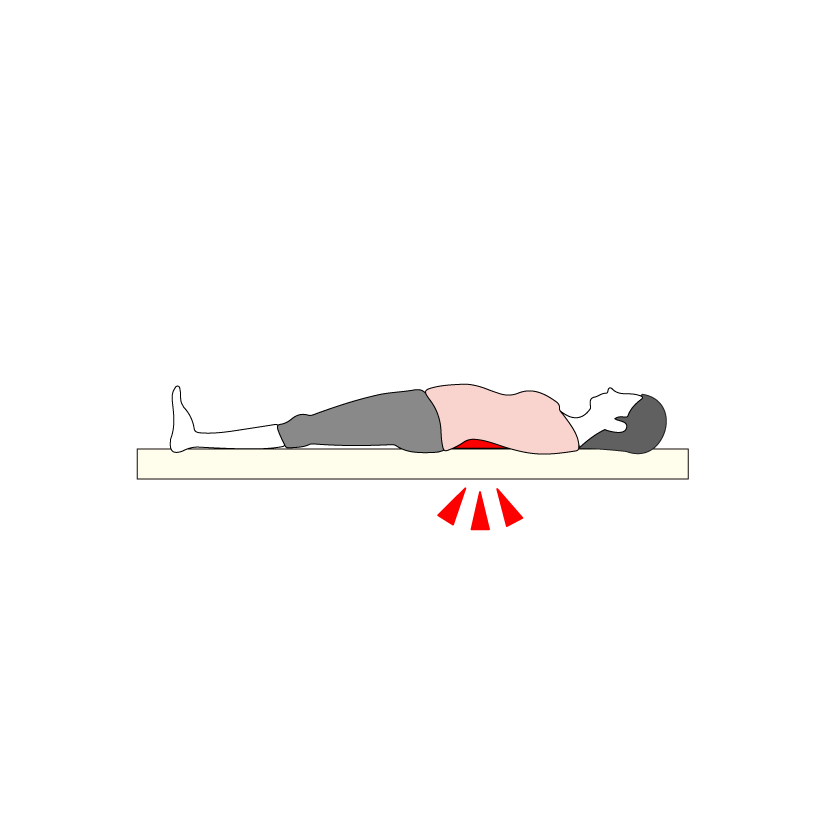
Muscles that are usually shortened try to return to their natural length. But when they have become stiff in a shortened state, they cannot lengthen, and that causes pain.
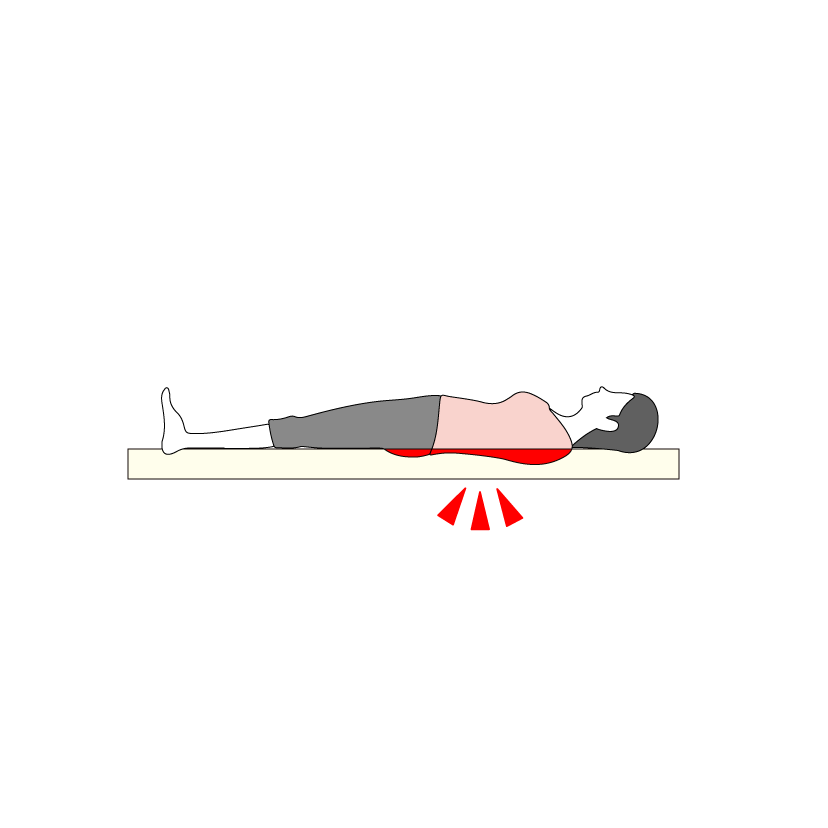
Why do we sleep on a mattress or futon? Sleeping directly on the floor can make your body hurt, and there are two reasons for that.
・Your body’s natural curves cannot be maintained. ・Your body weight becomes concentrated in one area.
Bedding is a tool that solves these two problems.
Our skeleton has a naturally correct position and an ideal set of curves. This is called anatomically correct posture . Even if your daytime posture is good, maintaining anatomically correct posture while sleeping requires filling the gaps between the floor and your body to an appropriate degree. A bed that is too soft is considered bad for your body because it disrupts anatomically correct posture.
A moderately soft material also increases the contact area between the body and the surface underneath it. This helps distribute the weight of the lower back, which is the heaviest part of the body, and prevents pain.
Therefore, the ideal mattress is one with the right firmness to maintain anatomically correct posture.
You can only expect results if you have a flexible body. If you lie down with stiff muscles, there will be a larger gap, which will cause more pain.
- The mattress has deteriorated and the part that supports your lower back has become hollowed out.
- The mattress is too soft
Apart from this case, the quickest way to resolve the issue is to first make your body more flexible by stretching.
How to reduce strain on your lower back
Check your type of distortion
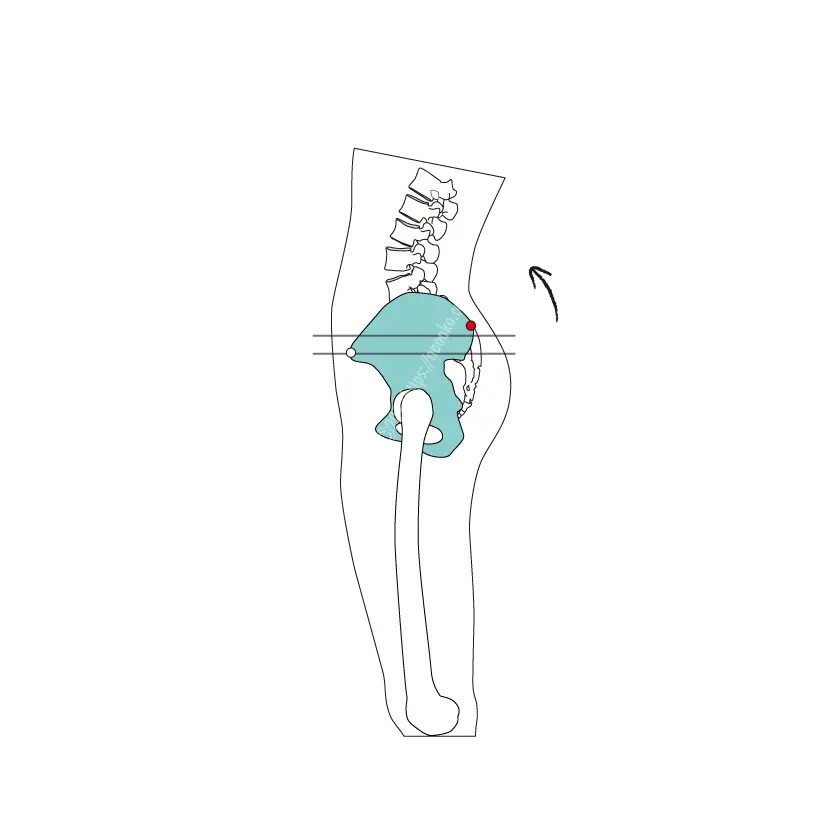
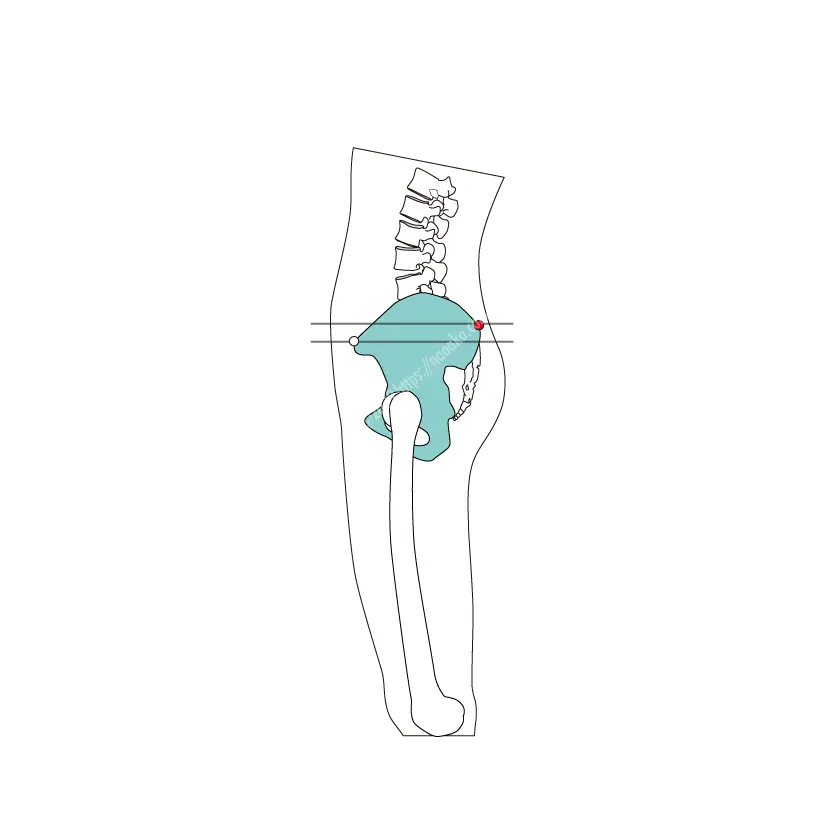
The correct position of the pelvis is determined by how far it tilts forward or backward. The correct pelvic position is when the line connecting the front and back of the pelvis is at an angle of 10 to 12 degrees.
To check, see whether the height difference between the white circle and the red circle falls between 0 and 3.5 cm.
The white circle at the front of the pelvis is called the anterior superior iliac spine (ASIS), and the red circle at the back is called the posterior superior iliac spine (PSIS).
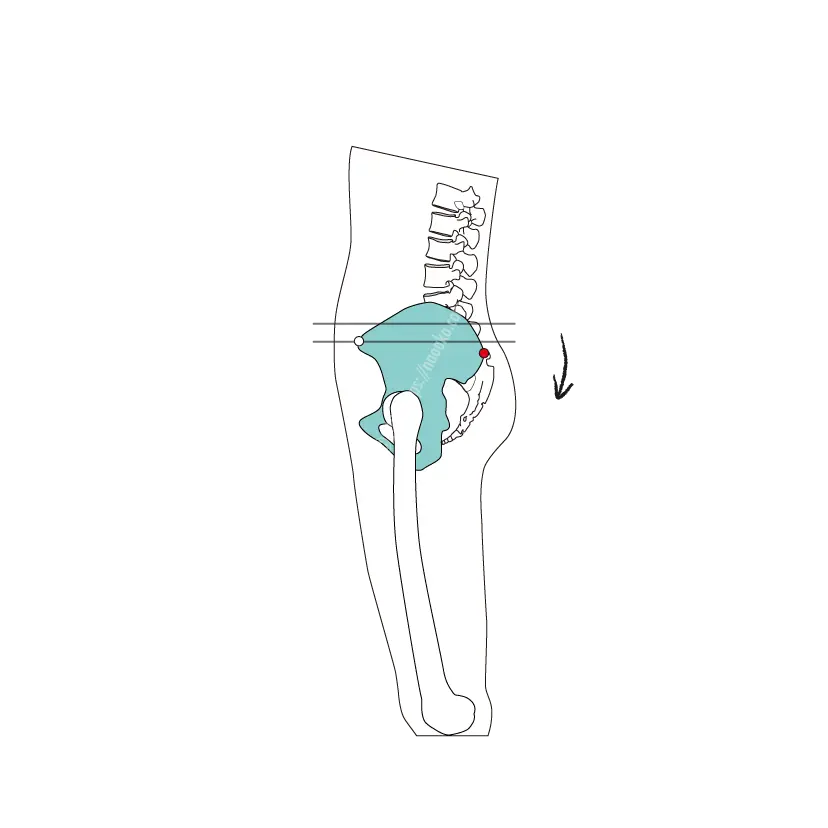
Stretching to correct distortion
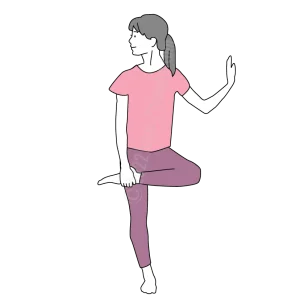
Stretch the rectus femoris, the muscle at the front of the thigh.
Simply bending your knee will stretch it, but if your upper body stays facing forward, your pelvis will arch and the effect will be reduced. Twisting your upper body brings out the maximum effect.
It is even more effective if you turn your face as far behind you as possible. Try it on both legs.
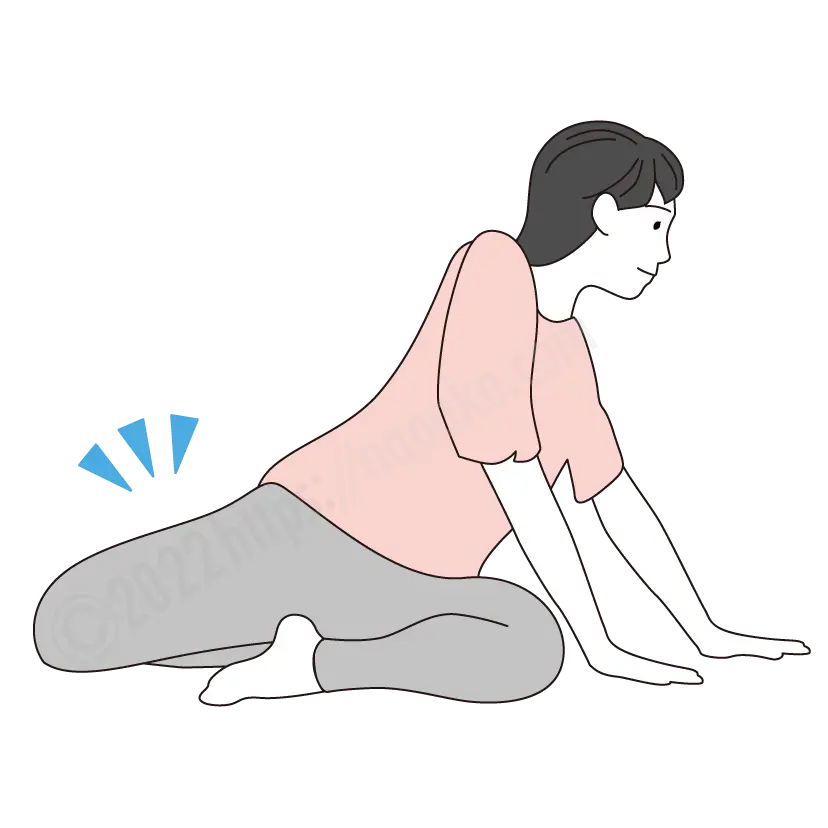
- Bend your right knee and place your right foot beside your hip.
- Bend your left knee.
- Twist your upper body to the left.
- Place both hands on the floor and turn your face as far back as you can.
- Stretch for 20 to 30 seconds.
It will temporarily relieve the pain, but it is not a cure for the pain, so it is likely that the pain will recur or move to a different location.
The purpose of placing the towel is to change the shape of the surface of the futon. By filling in the gaps between your body and the futon that are created because your body is stiff, you can prevent pain.
The important thing to note here is that the towel only changes the shape of the futon, not your body.
The cause of pain when sleeping is that the muscles are too stiff to assume a sleeping position, and the pain occurs when there is a gap between the futon and the body for a long period of time, putting strain on the muscles.
Therefore, even if you use a towel, not only will muscle tension remain, but the possibility of pain recurring remains. Furthermore, the unevenness created by the towel will help your body maintain poor posture during the day. For example, if you have a habit of standing with your back arched, you will continue to arch your back while you sleep. Maintaining muscle tension for 24 hours is likely to cause pain in different areas.
In response to the question, "Will the pain improve if I lay a towel down?", the answer is, "It will lead to temporary relief, but there is a risk of the pain returning, and the pain may occur in a different location than before."